Published: November 11, 2026
The right tack strip or tack can
make a big difference in how an upholstery project comes together. Whether
you’re creating a crisp, hidden edge, working around curved furniture, securing
a convertible top, or attaching webbing to a frame, each fastener serves a
specific purpose. Understanding the differences can help you choose the right
option for your next project.
Cardboard Tack Strips
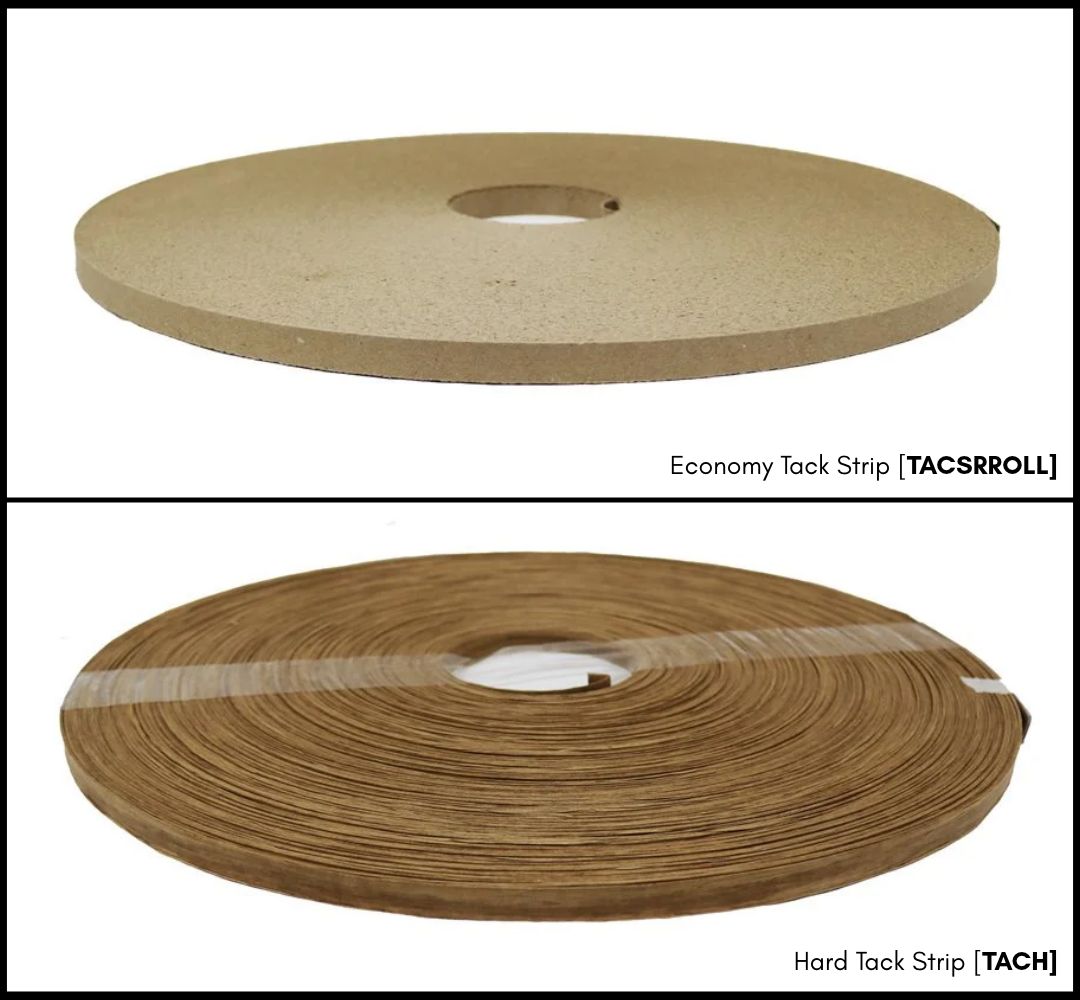
Cardboard tack strips are
commonly used to create clean, crisp edges when blind tacking fabric or
leather. Blind tacking allows you to secure the material without leaving
visible staples or fasteners on the finished surface.
These strips are often used along
the outside arms and top backs of chairs, as well as other areas where a
straight, finished edge is needed. They can also be used alongside piping to
help support it and prevent sagging.
We offer cardboard tack strips in
both economy and hard-style rolls.
Metal Tack Strips
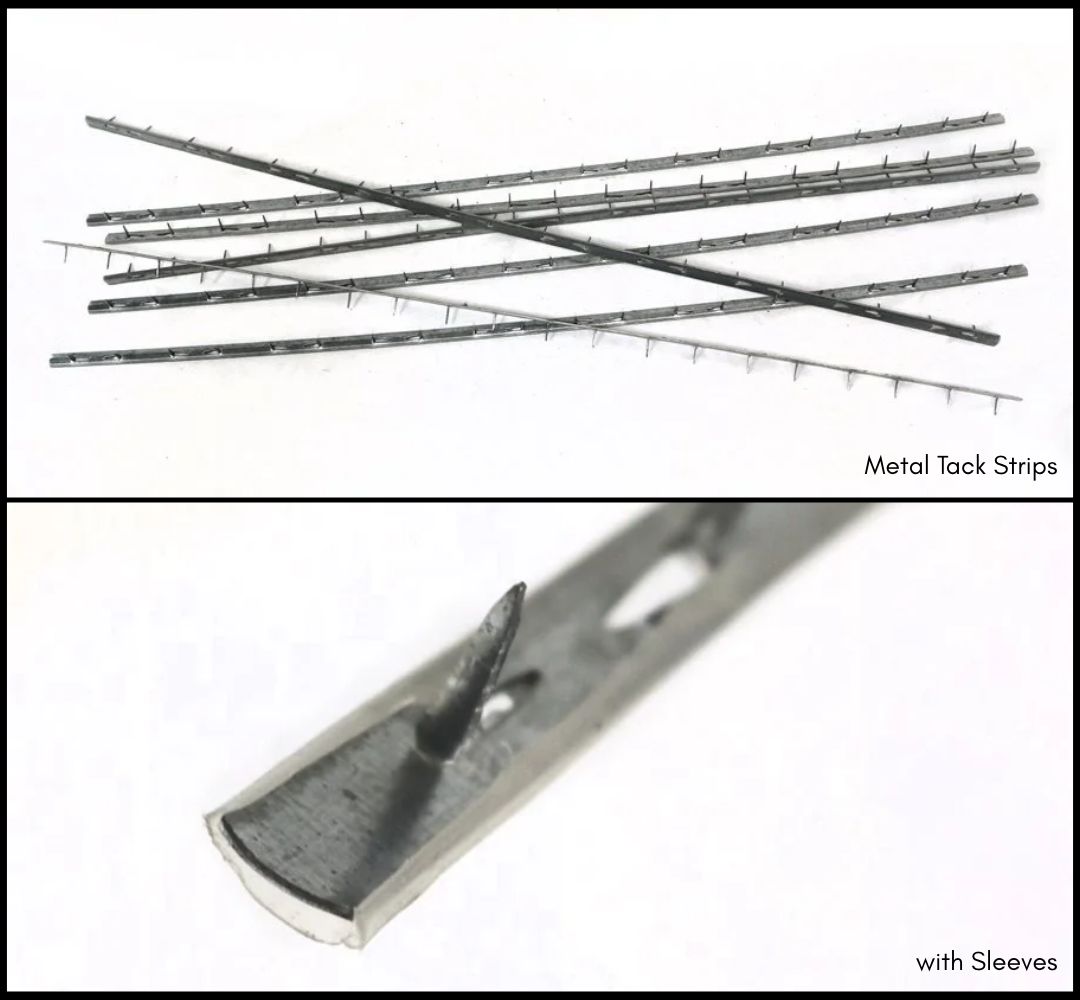
Metal tack strips are designed to
secure upholstery material while creating a clean, straight edge without
requiring staples to attach the fabric to the strip itself. They are especially
useful in areas where visible staples would detract from the finished
appearance, such as the sides of chair backs and other exposed edges.
Metal tack strips feature sharp
prongs that grip and hold the fabric in place. We carry options with and
without plastic sleeves. The plastic sleeve helps reduce noise caused by
friction and protects delicate fabrics from being damaged.
Metal tack strips provide a
practical way to achieve a finished edge with a secure hold and no visible
staples along the secured edge.

Flexible Tack Strips
(Pli-Grip)
Curved upholstery edges can be
challenging to finish with rigid tack strips. Flexible tack strips, commonly
known as Pli-Grip, are designed to bend and follow contours that straight
strips cannot accommodate as easily.
Pli-Grip is frequently used on
curved chair arms, outside wings, and arched chair backs. The strip is stapled
to the furniture frame, and its teeth grip the fabric to hold it in place. This
creates a finished edge without requiring traditional gimp tacks or double
welting in applications where the flexible strip is suitable.
Rubber Tack Strips for
Convertible Tops
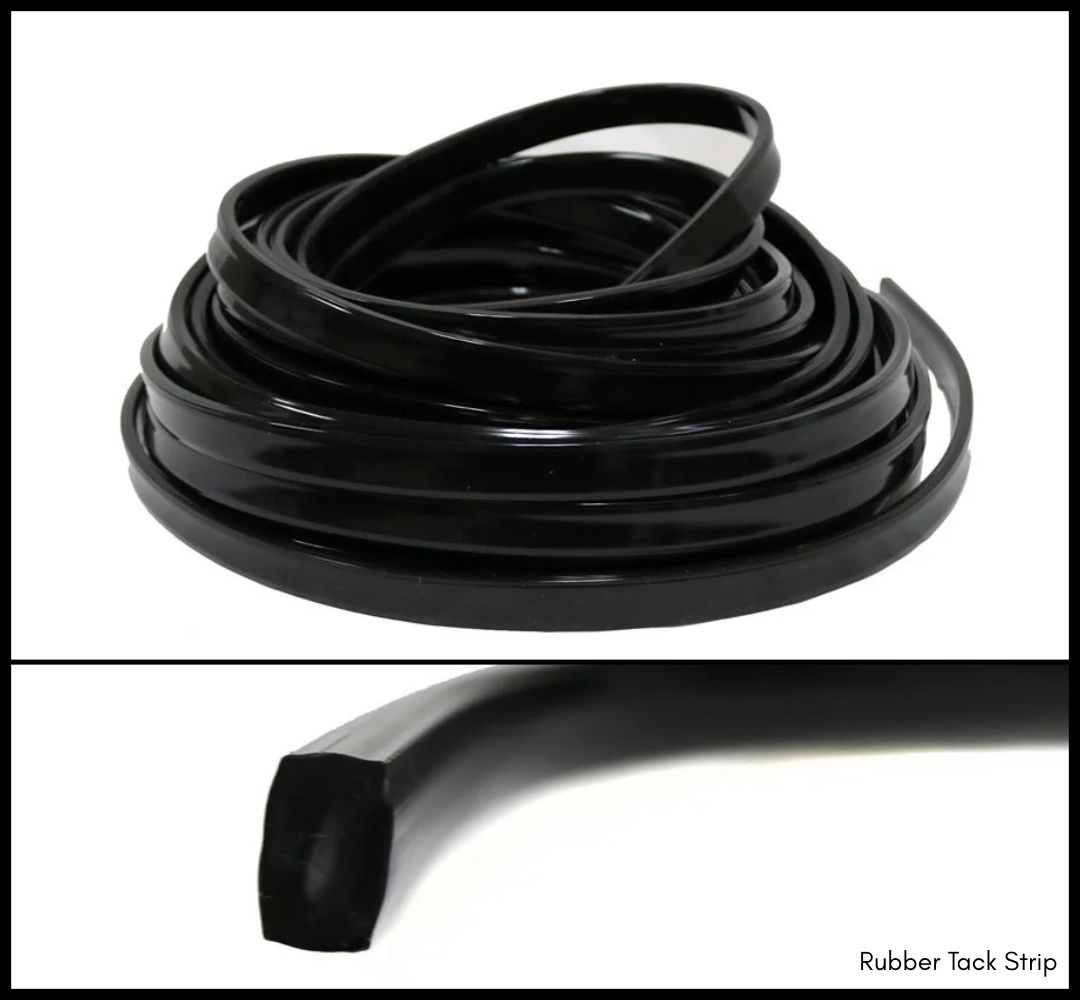
Rubber tack strips are commonly
used in automotive convertible-top applications, including front and rear bow
areas. Made from semi-rigid rubber, they provide anchoring and support where
the top material needs to be secured.
Beyond convertible tops, these
strips may also be used in certain automotive applications, including door trim
and headliners, as well as some marine applications.
One advantage of rubber tack
strips is that they do not absorb moisture like traditional absorbent
materials. This helps avoid moisture-related rust and corrosion issues
associated with certain metal fastening components.
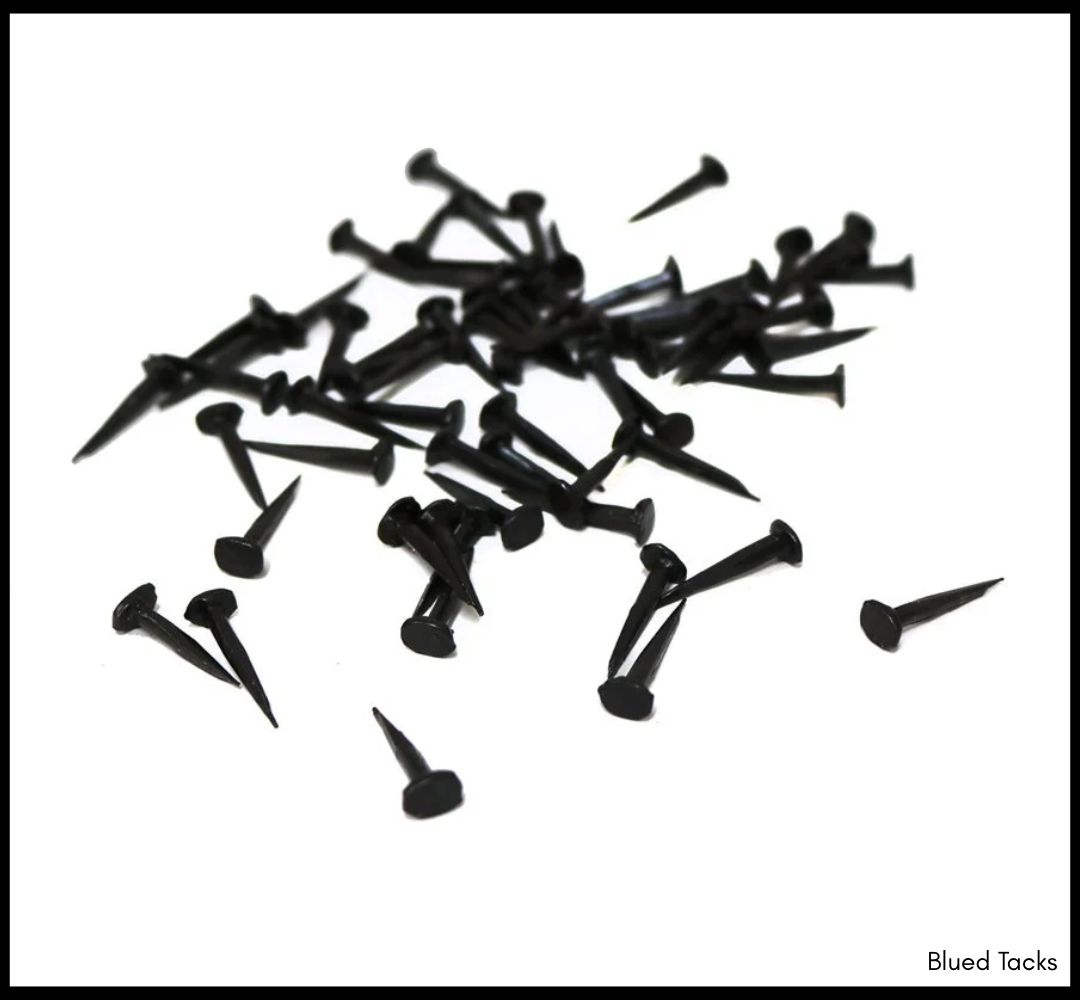
Blued Tacks
Sometimes a traditional tack is
exactly what the job calls for. Blued Tacks are a dependable fastening
option for securing upholstery materials, including webbing, fabric, and
leather.
These tacks feature sharp points
that help penetrate materials and thin, strong oval heads that hold them in
place. Their blued finish provides some protection against rusting, making them
a practical choice for upholstery and woodworking applications.
Blued Tacks are particularly
useful for traditional upholstery work where materials need to be secured
directly to a furniture frame. They are also an option for attaching webbing
during seat construction and repair.
Choosing the Right Tack Strip
or Tack
With several options available,
the best choice depends on the shape of the upholstery edge, the material being
secured, and the appearance you want to achieve.
·
Cardboard tack strips: For straight,
crisp edges and blind tacking, particularly on chair arms and backs.
·
Metal tack strips: For securing fabric
along straight edges where visible staples are undesirable.
·
Flexible tack strips (Pli-Grip): For
curved arms, outside wings, and arched backs that require a finished edge.
·
Rubber tack strips: For convertible tops
and other compatible automotive or marine applications that require anchoring
and support.
·
Blued cut tacks: For traditional
fastening of webbing, fabric, and leather to suitable frames.
Using the appropriate fastening
method helps keep upholstery materials secure while producing the clean,
professional finish your project requires.
Whether you’re restoring a chair,
upholstering a curved furniture frame, repairing a convertible top, or securing
webbing, having the right fastening supplies on hand makes a difference.
Albright’s Supply offers a range
of tack strips and upholstery tacks for furniture, automotive, and other
upholstery applications. Explore our selection to find the supplies you need
for your next project.
